
 Shop now and pay later with flexible payment options from Klarna
How to choose the correct wheelchair, a guide from The Mobility Outlet (TMO)
27th August 2025
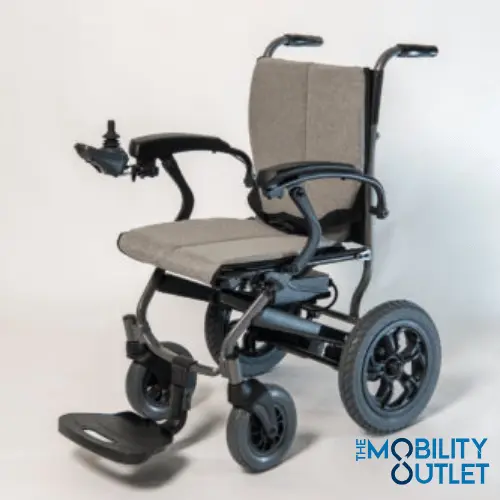
This is the most important part of the process for obtaining a wheelchair, that will meet your needs and give you a product that will meet your needs successfully. Take time here before you make your purchase to think about what you need so you get the right product first time. This will save you both time and money. We The Mobility Outlet (TMO) have created the following guidelines to help you in this process.
- Occupant Weight – wheelchairs and rollators have a maximum weight carrying capacity, this is the total weight that the wheelchair can safely carry. This should include your weight, the usual clothes you wear, any things you carry while in the wheelchair. This will give you the total weight that needs to be carried by the wheelchair.
- All products listed on The Mobility Outlet (TMO) show the maximum carrying capacity, use this to limit your search to products that are suitable.
- Wheelchair Propulsion – Wheelchairs are described as either Attendant Propelled or Occupant Propelled. What this means for the user is:
- Attendant Propelled – A small wheel at the back of the wheelchair which means that the person in the chair requires an attendant to push them. The chair cannot be manoeuvred by the person in the wheelchair.
- Occupant Propelled – A large wheel with a diameter of 22″ or 24″ and fitted with a handrim which allows the user in the wheelchair to manoeuvre the wheelchair themselves. This gives the user freedom to move themselves as they require. Occupant Propelled wheelchairs can also be moved by an attendant.
- If you require additional comfort when being moved in the wheelchair and would normally select an Attendant Propelled model, think about selecting the Occupant Propelled model, the larger wheel will give a smoother ride over uneven surfaces.
- If you need to side transfer to and from the wheelchair, the larger wheel makes this more difficult as the wheel will sit above the seat tube of the wheelchair. The user will have to move forward in the wheelchair to allow them to transfer without the larger wheel getting in the way.
- Browse our Manual Wheelchairs to compare self-propelled and transit options.
- Occupant/User Activity and Environment – Think about how active you will be, what do you need the wheelchair to do for you. Look at the specification of the chair, its dimensions, weights and accessories. Look for a wheelchair that will meet your requirements. However, a thing to remember is that on less expensive chairs you will have to fit the wheelchair rather than the wheelchair fit you. The more bespoke a wheelchair the more expensive it is and the more guidance should be sought.
- For lightweight, portable options, explore our Lightweight Wheelchairs range.
- User Safety Awareness – The user is in the wheelchair, how aware are they of potential risks, stability issues if you lean too much to the side or back. Being able to get in and out of the wheelchair, do the footrests move out of the way so you do not trip. Can the armrest move out of the way to allow you to side transfer. Do you need stabilisers, elevating leg rests, stump supports, can the chair you want use them.
- Seat Size – selecting the correct seat size is important. You do not want a chair either too small, you cannot fit in it, or too large, you cannot use the footrests or armrests correctly due to the width. The best way to measure your required seat size is to sit on a firm surface and measure the widest point of your body, this will ensure that the chair is the correct width for you.
- Footrests – All footrests of chairs on The Mobility Outlet are height adjustable, you can set the footrest to the correct height to ensure that you are sitting comfortably in the chair. Make sure that as part of the initial setting up you make sure the footrests are set at the correct height.
- The Lap Belt – this is an important safety device. When using the wheelchair make sure that you secure the lap belt set to the correct length to keep you safe in the chair. The belt should be angled at close to 45 degrees to ensure its most efficient use.
- Transport – Will you be using community transport or suitably equipped vehicles, in that case the chair needs to be “Crash Tested” that is to have passed the ISO 7176-19 test. This means that the chair can be used safely in these vehicles. Not all chairs The Mobility Outlet supply are crash tested, those that are, you will see them marked as “Crash Tested”.
- For travel-friendly options, see our Folding Wheelchairs collection.
Use the above information to guide your wheelchair purchase decision to get the chair right first time.
The Mobility Outlet is here to support you in choosing your wheelchair or rollator.