
Selecting the right wheelchair for you
 5th May 2026

A minute or two of your time reading our 2-page guide will save you a lot of time and trouble
Deciding on what type of wheelchair you need is a difficult choice if you have not bought one before. Our guide will hopefully help you choose the right one.
However, if in doubt, ask us and we will be happy to help you decide on the right chair.
We also offer an easy returns policy if the chair doesn’t meet requirements when you take it out of the box – all we ask is that you don’t use it outside and you comply with our returns policy.
Wheelchair terminology which will help you make a great choice.
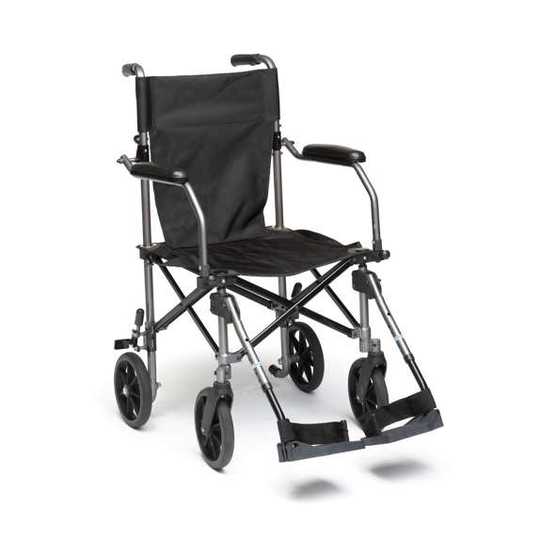
Attendant propelled – the person in the chair (occupant) is pushed by another person. These chairs usually have smaller back wheels but not too small as they are harder to push and the person in the chair will feel every bump! They are easier to store in car boots. Ideally for lifting you need a chair weighing around 10kg or less. Caution though! Some advertisements quote weights with wheels and footrests removed and call it lifting weight! You really need to be thinking of total weight including all wheels etc of 10kg as taking wheels on and off etc can be time consuming. Sometimes though you may have to if your car boot is small.
Top Tips
We suggest you have a chair with brakes that can slow a chair down when travelling down hills and slopes you will be amazed how useful this feature is.
If no drop kerb . Whilst lifting on to a kerb, its easier to tilt a wheelchair backwards so the front wheels clear the kerb. At the back of a chair should be a tipping lever for your foot to tip the chair whilst you still have hold of and control of the push handles. You can then lift the back of the chair whilst pushing onto the pavement.
Self-Propelled – the person in the chair can use their arms and hands to move and manoeuvre the chair . They usually have a big back wheel and hand rims. The occupant is usually someone who still wants to maintain or use upper body strength and a greater degree of independence. They still can be pushed but are harder to get into cars as the back wheels are quite large and they sometimes are hard to get through doorways in homes or move in tight spaces.
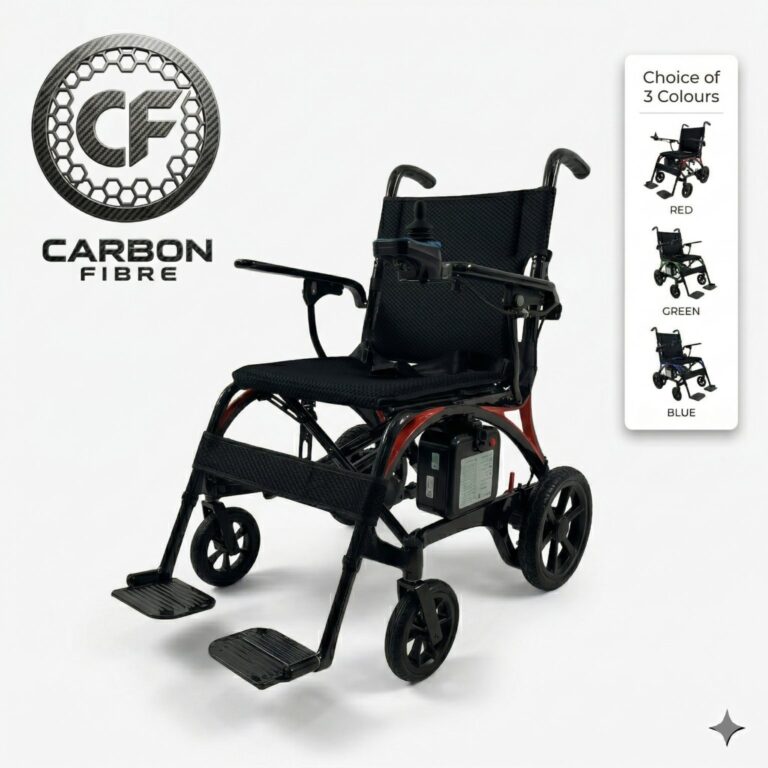
Power Chairs – powered by batteries which allow occupants to travel further with greater independence. They are usually heavier unless they are made from lighter materials like carbon fibre . A carbon fibre chair can weigh around 15kg with everything included. Taking battery out, which is easy to do, can reduce this to 13kg and into the weight range where it can be lifted more easily . Carbon though is a much more expensive material than aluminium or steel which are heavier.
Some considerations:
- Lightweight vs. Heavy-Duty: If lifting the chair into a car is a primary concern, prioritize lightweight aluminium frames. If durability is paramount and lifting is less frequent, steel frames offer longevity but are heavier. Also lightweight chairs are easier to push as they weigh less.
- Self-Propelled vs. Attendant-Propelled: If the user will primarily be moving themselves, choose an occupant-propelled chair with large rear wheels. If an attendant will be pushing, choose an attendant-propelled chair.
- Weight Capacity: Select a chair with a weight capacity that comfortably exceeds the occupant’s weight to ensure their safety and prevent damage to the chair.
- Accessories: Consider any specific needs and choose the appropriate accessories for added comfort and support, like cushions and headrests. Cushions make the chair absorb bumps better, and the occupant has a much more pleasant ride.
- Powered vs. Manual: If the user desires increased independence and reduced exertion, a powered wheelchair is a good option. Manual wheelchairs are suitable for those who have the strength and stamina for self-propulsion or have a capable and reasonably fit attendant available.
5 steps to select the right chair for you
- Use the guide : above to decide which type of chair you want – lightweight/power /self/attendant etc
- Measurements: Measure the user’s hip width by measuring hip to hip and not circumference Compare this to the chairs seat width. Can they fit in comfortably? Also how tall are they? If their legs are long can you adjust the length of the foot rests so the occupants knees are not too high or too low for comfort. Also, measure doorway widths and spaces where the wheelchair will be used to ensure manoeuvrability and compare to the chairs width outer wheel edge to outer wheel edge of the opposite wheel.
- Occupant Weight: Does the chair’s maximum rating exceed the occupant’s weight? A key safety feature
- Budget: Wheelchair prices vary greatly. Consider your budget and explore funding options if necessary, like charities or stage payments using the payment options that we have.
- Ask us for Help. If needed, we can also help you choose the right option via the website contact.